



Fast Self-Service for Facebook Users.
24/7 online service available to all customers.
To avoid waiting time online, you could submit a ticket to us, our agent will respond within 1 business day.


Fast Self-Service for Facebook Users.
24/7 online service available to all customers.
To avoid waiting time online, you could submit a ticket to us, our agent will respond within 1 business day.
Sign In / Register
My Balance
Modlily Club
Sign in for the best experience
Processing
Please enter a valid number
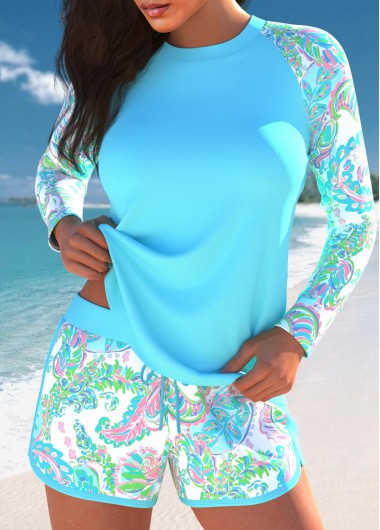

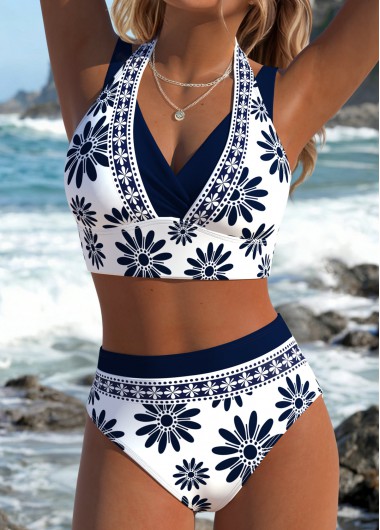
I absolutely love this suit. The fit was spot on and does not fade. I highly recommend it.
 MODLILY CLUB
% Off
MODLILY CLUB
% Off
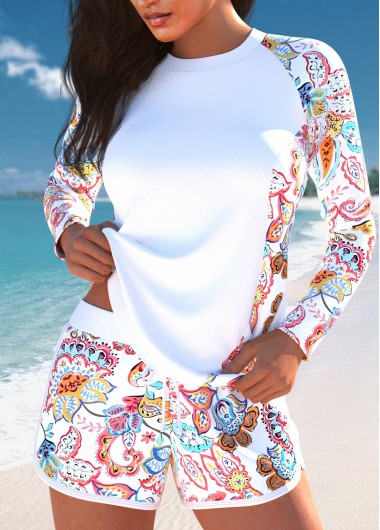
This suit is super cute, nice fit. I especially like that the top has a built in bra. love it!
MODLILY CLUB
% Off
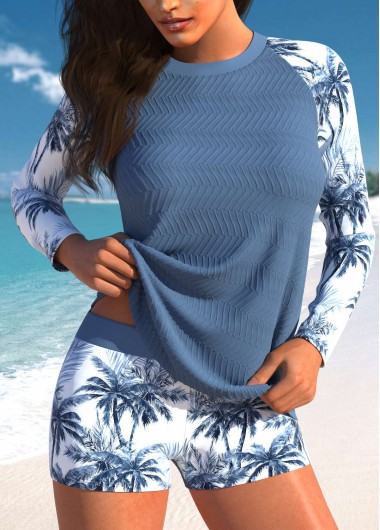
Happy to find these long sleeved sets that give me the sun protection I need and still feel sexy.
MODLILY CLUB
% Off

Swimwear with sleeves does three things, and only one of them is about covering up.
Sun. The shoulders and upper back burn before anywhere else and are the hardest places to reach with sunscreen. A sleeve handles that for a whole day without reapplying anything, which matters more on a beach than at a pool.
Arm coverage. The upper arm is the area people most often want covered and the one a standard suit leaves entirely exposed. A sleeve is the only thing that addresses it directly.
Stability. The least obvious benefit and the one people notice most. A sleeved top is anchored at two extra points, so the neckline does not shift when you lift your arms and there is nothing to rearrange when you stand up out of the water. For anyone who spends the day getting in and out rather than sitting still, that alone tends to settle the choice.
Four lengths, and they are not interchangeable.
If sun is the main reason you are buying, judge the fabric rather than the sleeve length alone. Hold it to the light: a dense knit in a deeper shade lets very little through, while a thin pale one lets more through than most people expect — and every fabric lets more through wet than dry. The sun protection range collects the styles cut for it.
Sleeves are rarely wanted on their own. Most people looking for them want the lower half covered as well, and the combination is what to shop for.
A sleeved top with swim shorts covers arms and upper thigh together and stays put in water. A sleeved top with a skirted bottom covers the same area but reads more like regular clothing once you are dry. For the fullest version of both, the modest range is cut this way throughout.
Fabric weight is the thing to check across all of these. A sleeve doubles the amount of material on the upper body, so a heavy fabric that holds water turns a sleeved suit into a cold, dragging layer for the rest of the afternoon. A light quick-drying stretch fabric behaves the same wet as dry, and that difference is invisible in a photograph but obvious within five minutes of getting out.
Two extra tubes of fabric, and once they are wet each one grips the arm along its whole length. Suction, not size — which is why going up a size does not help.
A pull-on style is hardest to get out of: peeling a wet sleeve inside out from the wrist takes both hands, and there is only one free. A front or half zip solves it, and it is also the hardest feature to spot in a product image — swimwear zips are usually made to match the fabric, so read the description rather than the photograph. Cuff width is the other variable: a narrow cuff seals against the wrist, and a slightly wider or split cuff comes off without a fight.
If shoulder movement is limited for any reason, treat the closure as the deciding feature rather than a preference.
Easy to overlook, because a sleeved top looks like it should support itself. It does not — the sleeves anchor the garment but carry no weight, and a fuller bust still needs a firm band and a structured cup underneath. Check the description for a built-in shelf or a molded cup rather than assuming coverage implies support; underwire styles are the version that holds.

Create Account
Create password to get more coupons!
$100 OFF
New Members only!
Create Account
Create password to get more coupons!
$100 OFF
New Members only!
$20 OFF
for text subscribe

*It includes 4 coupons
Expired:
CODE:
Expired:
Fast Self-Service for Facebook Users.
24/7 online service available to all customers.
To avoid waiting time online, you could submit a ticket to us, our agent will respond within 1 business day.