



Fast Self-Service for Facebook Users.
24/7 online service available to all customers.
To avoid waiting time online, you could submit a ticket to us, our agent will respond within 1 business day.


Fast Self-Service for Facebook Users.
24/7 online service available to all customers.
To avoid waiting time online, you could submit a ticket to us, our agent will respond within 1 business day.
Sign In / Register
My Balance
Modlily Club
Sign in for the best experience
Processing

 Multi Color
White
Brown
Pink
Grey
Purple
Red
Beige
Yellow
Camel
Orange
Coral
Gold
Please enter a valid number

Precioso!
 MODLILY CLUB
% Off

Love the fit and look
MODLILY CLUB
% Off
Runs true to size. Got a lot of compliments when I wore it to church
MODLILY CLUB
% Off
 MODLILY CLUB
% Off

This was Perfect for the Wedding
MODLILY CLUB
% Off
 MODLILY CLUB
% Off
 MODLILY CLUB
% Off
 MODLILY CLUB
% Off
 MODLILY CLUB
% Off
 MODLILY CLUB
% Off
 MODLILY CLUB
% Off
 MODLILY CLUB
% Off
 MODLILY CLUB
% Off
 MODLILY CLUB
% Off
 MODLILY CLUB
% Off
 MODLILY CLUB
% Off
 MODLILY CLUB
% Off
 MODLILY CLUB
% Off
 MODLILY CLUB
% Off
 MODLILY CLUB
% Off
 MODLILY CLUB
% Off
 MODLILY CLUB
% Off
 MODLILY CLUB
% Off
 MODLILY CLUB
% Off
 MODLILY CLUB
% Off
 MODLILY CLUB
% Off
 MODLILY CLUB
% Off
 MODLILY CLUB
% Off
 MODLILY CLUB
% Off
 MODLILY CLUB
% Off
 MODLILY CLUB
% Off
 MODLILY CLUB
% Off
 MODLILY CLUB
% Off
 MODLILY CLUB
% Off
 MODLILY CLUB
% Off
 MODLILY CLUB
% Off
 MODLILY CLUB
% Off
 MODLILY CLUB
% Off
 MODLILY CLUB
% Off
 MODLILY CLUB
% Off
 MODLILY CLUB
% Off
 MODLILY CLUB
% Off
 MODLILY CLUB
% Off
 MODLILY CLUB
% Off
 MODLILY CLUB
% Off
 MODLILY CLUB
% Off
 MODLILY CLUB
% Off
 MODLILY CLUB
% Off
 MODLILY CLUB
% Off
 MODLILY CLUB
% Off
 MODLILY CLUB
% Off
 MODLILY CLUB
% Off
 MODLILY CLUB
% Off
 MODLILY CLUB
% Off
 MODLILY CLUB
% Off
 MODLILY CLUB
% Off
 MODLILY CLUB
% Off
 MODLILY CLUB
% Off
 MODLILY CLUB
% Off
 MODLILY CLUB
% Off
 MODLILY CLUB
% Off
 MODLILY CLUB
% Off
 MODLILY CLUB
% Off
 MODLILY CLUB
% Off
 MODLILY CLUB
% Off
 MODLILY CLUB
% Off
 MODLILY CLUB
% Off
 MODLILY CLUB
% Off
 MODLILY CLUB
% Off
 MODLILY CLUB
% Off
 MODLILY CLUB
% Off
 MODLILY CLUB
% Off
 MODLILY CLUB
% Off
 MODLILY CLUB
% Off
 MODLILY CLUB
% Off
 MODLILY CLUB
% Off
 MODLILY CLUB
% Off
 MODLILY CLUB
% Off
 MODLILY CLUB
% Off
 MODLILY CLUB
% Off
 MODLILY CLUB
% Off
 MODLILY CLUB
% Off
 MODLILY CLUB
% Off
 MODLILY CLUB
% Off
 MODLILY CLUB
% Off
 MODLILY CLUB
% Off
 MODLILY CLUB
% Off
 MODLILY CLUB
% Off
 MODLILY CLUB
% Off
 MODLILY CLUB
% Off
 MODLILY CLUB
% Off
 MODLILY CLUB
% Off
 MODLILY CLUB
% Off
 MODLILY CLUB
% Off
 MODLILY CLUB
% Off
 MODLILY CLUB
% Off
 MODLILY CLUB
% Off
 MODLILY CLUB
% Off
 MODLILY CLUB
% Off
 MODLILY CLUB
% Off
 MODLILY CLUB
% Off
 MODLILY CLUB
% Off
 MODLILY CLUB
% Off
 MODLILY CLUB
% Off
 MODLILY CLUB
% Off
 MODLILY CLUB
% Off
 MODLILY CLUB
% Off
 MODLILY CLUB
% Off
 MODLILY CLUB
% Off
 MODLILY CLUB
% Off
 MODLILY CLUB
% Off
 MODLILY CLUB
% Off
 MODLILY CLUB
% Off
 MODLILY CLUB
% Off
 MODLILY CLUB
% Off
 MODLILY CLUB
% Off
 MODLILY CLUB
% Off
 MODLILY CLUB
% Off
 MODLILY CLUB
% Off
 MODLILY CLUB
% Off

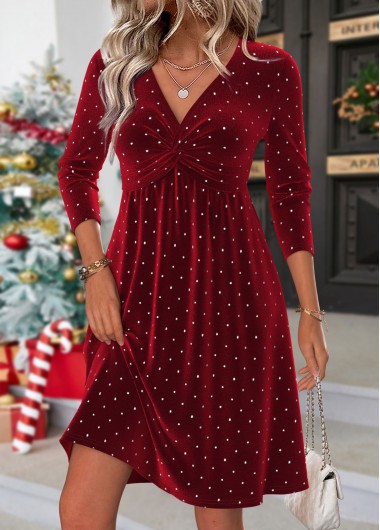
Midi dresses end between the knee and ankle, but that interval contains several different proportions. A hem near the upper calf gives a different effect from one closer to the ankle. On a petite frame, the same garment can appear longer than it does on a taller wearer. Start by considering where you want the skirt to finish, not by assuming that every midi will create the same outline.
The waist and hem work together. A defined waist followed by an A line skirt creates one division through the outfit; a straighter outline creates another. If the waist sits lower than you prefer, shortening the skirt alone may not produce the proportion you had in mind. A petite shopper can use both relationships to judge the look without needing to choose only the shortest garment.
Keep the shoe visible in the decision. A clear gap between hem and shoe can separate the pieces, while a higher shoe opening makes the lower part of the outfit read more continuously. Neither approach is a rule for looking taller. It is a way to understand why two midi outfits can feel quite different on the same person. For a deliberately shorter alternative, explore mini dresses; a longer outline continues in maxi dresses.
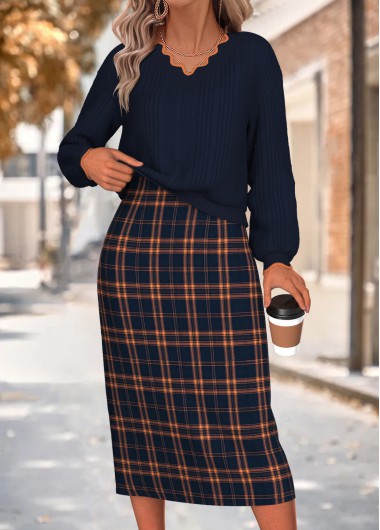
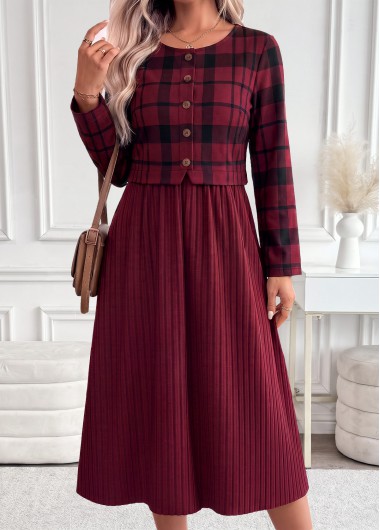
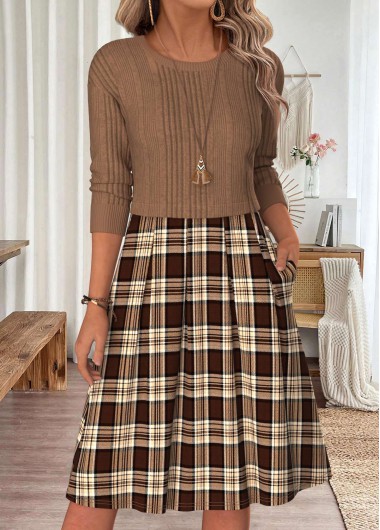
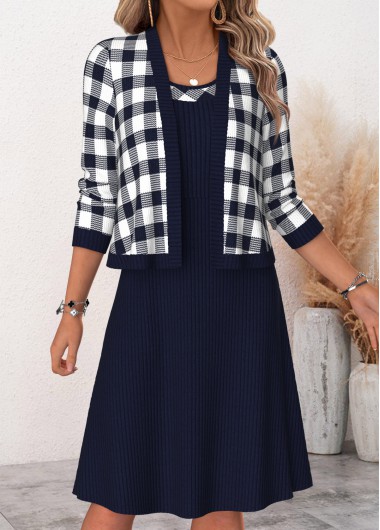
Workday dressing brings the hemline into a wider setting. A dark coffee button plaid A line long sleeve midi puts a repeated pattern beside button detailing, while a white A line short sleeve split neck midi creates a different combination of shade and neckline. Think about how the whole garment fits the tone of your workplace. A midi hem is one component; pattern and overall detail still matter.
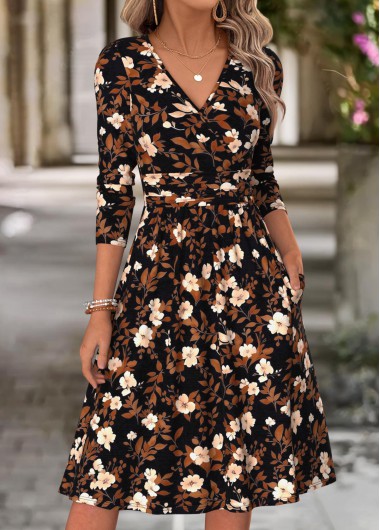
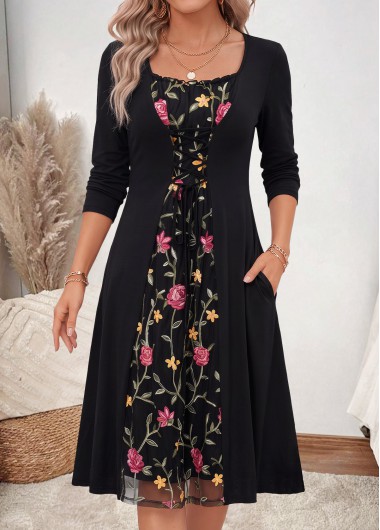
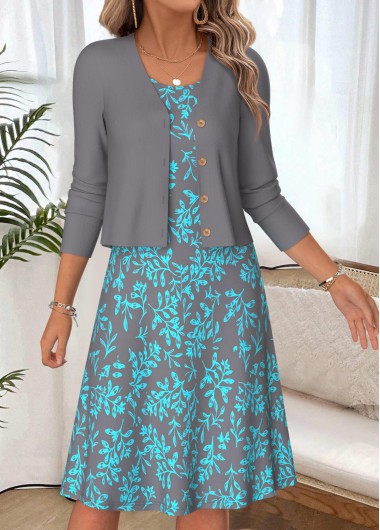
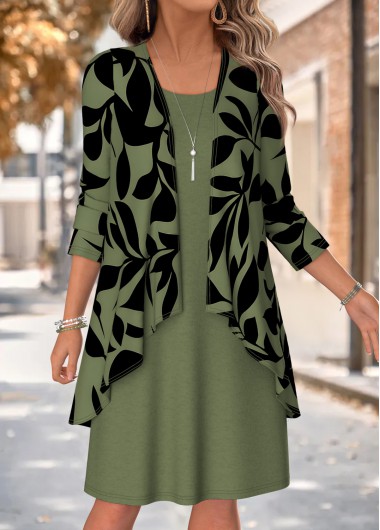
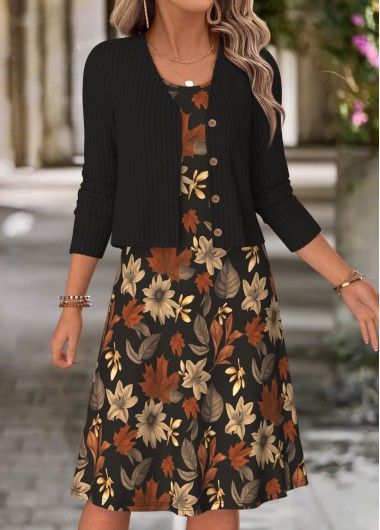
A black floral midi with a cover up takes the same intermediate length toward a coordinated outfit. The outer layer introduces another edge around the print and can change how much of the pattern is visible. On a day that includes both a familiar office and an informal dinner, consider whether you enjoy the dress with the layer removed as well as worn together. A blue striped sleeveless V neck midi offers another defined direction for a separate jacket you already own.
For a workplace focused search, work dresses keeps the setting central. Weekends and informal appointments have their closer route in casual midi dresses. A shirt style adds another design question, developed in midi shirt dresses: the collar and front detailing can influence the mood as much as the skirt length. Choose that branch because you want those features, rather than because midi automatically means suitable for every office.
A wedding outfit needs more information than the position of its hem. An intermediate skirt may be useful for your plans, but the invitation still establishes how dressed up the event is intended to be. Consider the venue and your role before deciding which garment details belong in the outfit. A midi label cannot replace the hosts' guidance or describe the character of the whole dress.
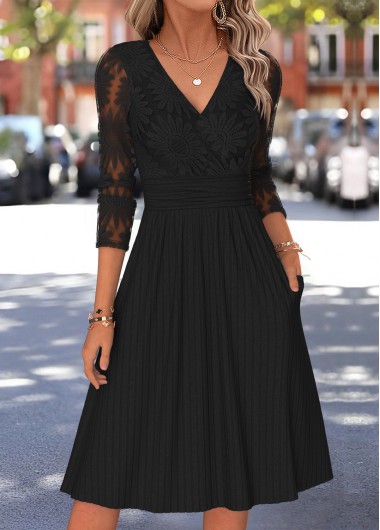
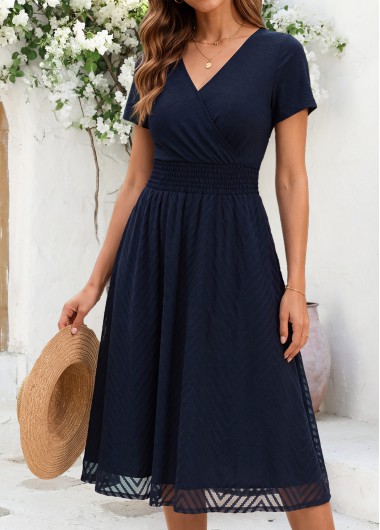
Within the midi outline, short sleeves and a round neckline frame the decorative surface of the navy lace design. The combination gives you a particular relationship between the sleeves, neckline and visible skirt, without the length itself deciding the occasion. Compare that whole impression with the invitation: how much detail you want at the neckline, whether you prefer an outer layer and how the lace fits the tone of the gathering all belong to the choice.
If the event calls for cocktail attire, continue with cocktail dresses. A specifically formal invitation deserves the closer consideration developed in formal dresses. Keep the midi preference as part of that decision, rather than expanding it into a rule that every wedding guest should choose this length. The useful question is whether this particular outfit expresses the level of dress requested for this particular gathering.
Sleeves change the balance above a midi skirt. Above the intermediate skirt, short sleeves leave a more open arm line and three quarter sleeves extend the upper outline. A round neckline and a V neckline frame the same sleeve length differently. Together, these elements determine whether the eye follows a continuous outline or pauses at several points through the garment.
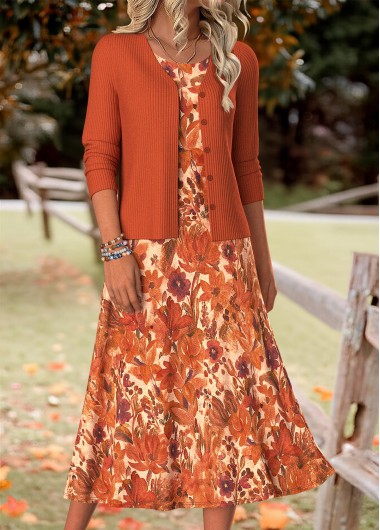
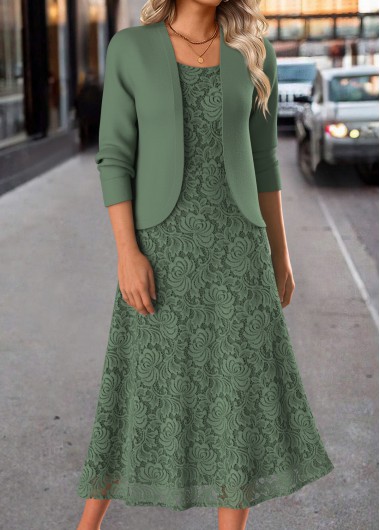
A cardigan adds a separate hem and front edge to that composition. A longer outer line can overlap more of the dress, while a shorter one can leave a waist detail visible. Compare the outfit both open and closed where the design allows; the arrangement of the print may look different each way. The layer is a design choice in its own right, rather than an automatic requirement of a midi skirt.
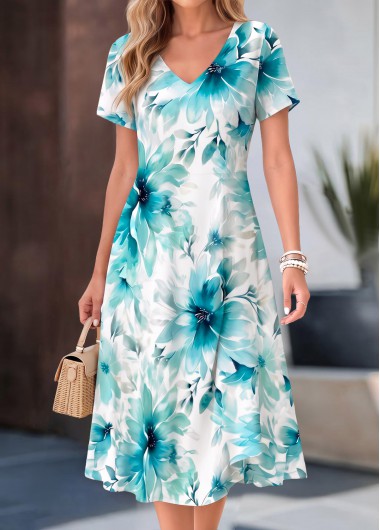
For a closer focus on sleeve options, browse midi dresses with sleeves. Keep the hem as the common point while you compare how much of the upper body is framed by the sleeve and neckline. A floral print introduces another layer of visual detail: its scale and placement can affect the overall impression even when the sleeve and skirt lengths remain similar.

Create Account
Create password to get more coupons!
$100 OFF
New Members only!
Create Account
Create password to get more coupons!
$100 OFF
New Members only!
$20 OFF
for text subscribe

*It includes 4 coupons
Expired:
CODE:
Expired:
Fast Self-Service for Facebook Users.
24/7 online service available to all customers.
To avoid waiting time online, you could submit a ticket to us, our agent will respond within 1 business day.