



Fast Self-Service for Facebook Users.
24/7 online service available to all customers.
To avoid waiting time online, you could submit a ticket to us, our agent will respond within 1 business day.


Fast Self-Service for Facebook Users.
24/7 online service available to all customers.
To avoid waiting time online, you could submit a ticket to us, our agent will respond within 1 business day.
Sign In / Register
My Balance
Modlily Club
Sign in for the best experience
Processing
Please enter a valid number

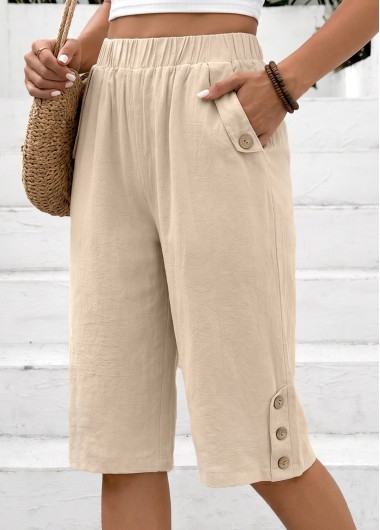
 MODLILY CLUB % Off
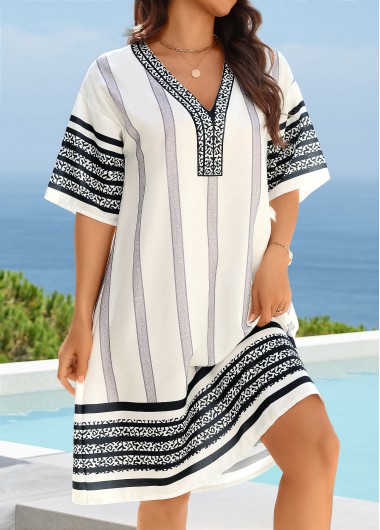
 MODLILY CLUB % Off
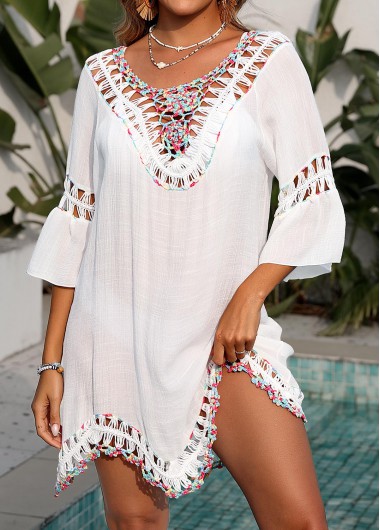
 MODLILY CLUB % Off
 MODLILY CLUB % Off
 MODLILY CLUB % Off
 MODLILY CLUB % Off
Yes, and sun protection swimwear works for a simpler reason than the marketing around it suggests: fabric between sun and skin blocks sun. That holds whether or not anything is printed on the label, and it is why a plain long-sleeved top outperforms bare shoulders under any amount of sunscreen.
What varies is how much gets through. A loosely knitted, thin, pale fabric lets a surprising amount of light past. A dense, deeper-colored one lets very little. Both are still doing more than nothing, and the difference between them is larger than most people assume.
Two things reduce the effect and neither is obvious. Wet fabric transmits more light than dry fabric, because water fills the spaces between fibres and carries light through them. And stretched fabric transmits more than relaxed fabric, since pulling a knit taut opens the gaps — which means a suit fitted tightly protects less than the same fabric with room in it.
Four checks, none of which need a rating, and all four work on a product photograph or on the garment in your hands.
None of this requires trusting anyone. It is also worth saying plainly that no swimsuit replaces sunscreen on the areas it does not cover — the two do different jobs.
Where a rating does appear, it is worth knowing what it measures. UPF is a laboratory figure for how much ultraviolet a fabric lets through — a rating of 50 means roughly one fiftieth gets past it. It is measured on dry, unstretched fabric, which is why the two conditions above matter so much: the same cloth performs below its number once it is wet and pulled taut. And a fabric with no stated rating is not an unprotected one; most of them have simply never been sent for testing.
The most useful thing on this page, and the point the whole category tends to skip.
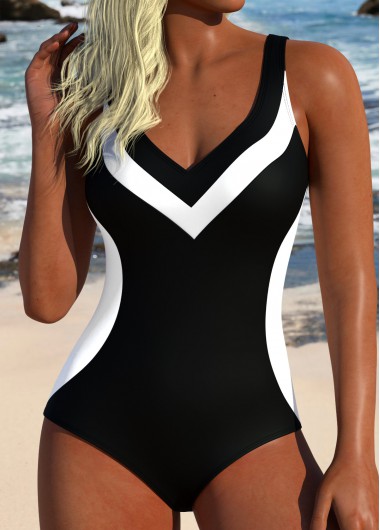
A garment can only protect the skin it sits on. A bikini in the most protective fabric available still leaves the shoulders, back, chest and thighs completely exposed, while an ordinary long-sleeved top in ordinary fabric covers all of the upper body. Area beats material, and it is not close.
So the useful order is: decide what you want covered first, then judge the fabric second. For the upper body, a rash guard or a long sleeve style covers shoulders, back and arms in one piece. Sleeved swimsuits do the same in a shorter length.
Below the waist, swim shorts cover the upper thigh, which is the area that catches sun while you are sitting rather than standing.
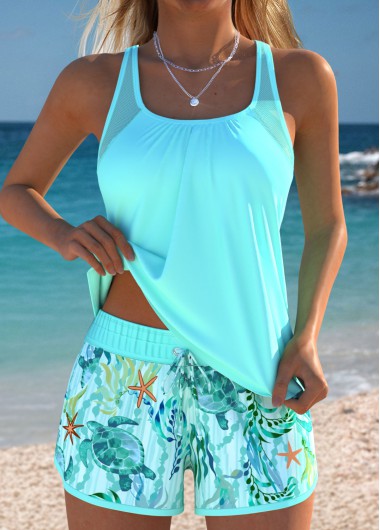
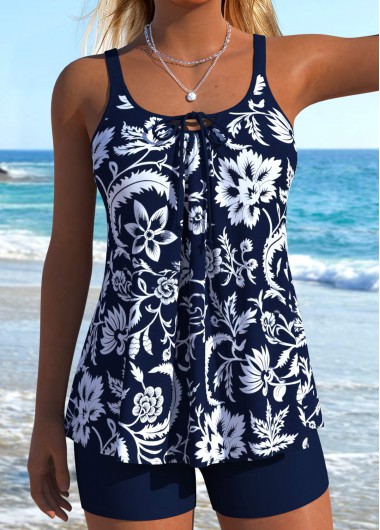
It sounds backwards, but a two-piece has one advantage here that a one-piece cannot offer: top and bottom are chosen separately. A long sleeve top with swim shorts covers more skin than most sleeved one-pieces manage, and a high-waisted bottom closes the gap at the middle.
It is also easier to get out of — a fully covering one-piece with wet sleeves is a struggle, and half a two-piece is not. What to check is that the overlap is generous enough that bending forward does not open it.
If you would rather solve it in a single purchase, the modest range combines a higher neckline, sleeves and longer legs by design, and a high neck style covers the chest and collarbone that a standard neckline leaves open — the spot that burns first and gets missed most often.

Create Account
Create password to get more coupons!
$100 OFF
New Members only!
Create Account
Create password to get more coupons!
$100 OFF
New Members only!
$20 OFF
for text subscribe

*It includes 4 coupons
Expired:
CODE:
Expired:
Fast Self-Service for Facebook Users.
24/7 online service available to all customers.
To avoid waiting time online, you could submit a ticket to us, our agent will respond within 1 business day.