



Fast Self-Service for Facebook Users.
24/7 online service available to all customers.
To avoid waiting time online, you could submit a ticket to us, our agent will respond within 1 business day.


Fast Self-Service for Facebook Users.
24/7 online service available to all customers.
To avoid waiting time online, you could submit a ticket to us, our agent will respond within 1 business day.
Sign In / Register
My Balance
Modlily Club
Sign in for the best experience
Processing
Please enter a valid number
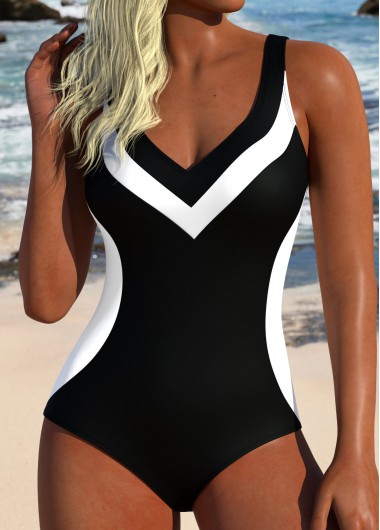

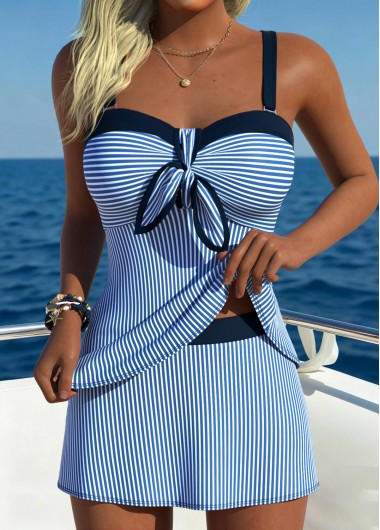
Lovely swimsuit, as pictured and the fit is great.
 MODLILY CLUB
% Off
MODLILY CLUB
% Off
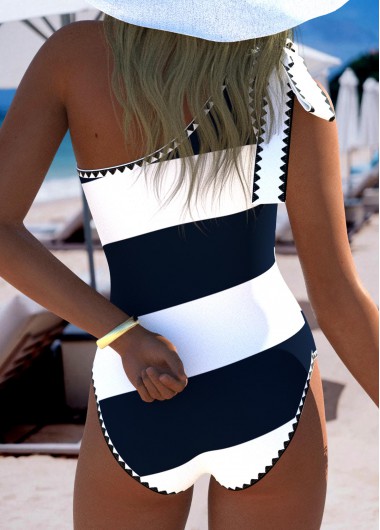
I love this suit. I love the one shoulder design and the bow that ties it together. High quality. Beautiful suit.
MODLILY CLUB
% Off

LOVE this suit!
MODLILY CLUB
% Off
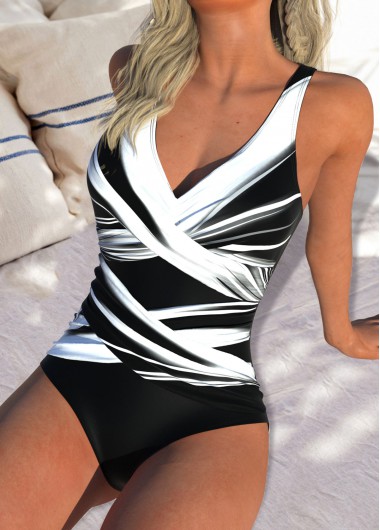
Looks great!
MODLILY CLUB
% Off

On a two piece the question answers itself. The top is one color, the bottom is the other, and the line between them lands at the waist because that is where the garment ends and the next one starts.
A one piece has no such join, so somebody had to choose. That choice is the single most consequential thing about any suit in this combination, and it is visible in the first photograph if you know to look for it.
Four placements cover nearly everything. A horizontal break under the bust, which is the highest of them. A break at the natural waist, which mimics a two piece. A diagonal running from one shoulder toward the opposite hip. And a vertical split down one side, where one half of the body is dark and the other pale.
Each one sets the proportions of the suit differently, and none of them is decided by your measurements — it is decided by where you want the garment to appear to divide. Reading the line first and the details second is the faster way through the category.
Once the line is placed, which color sits on which side of it is the second decision, and the two arrangements behave differently.
Dark above and pale below puts the lighter, more demanding half on the part of the suit that spends the most time in contact with a seat, a towel or a pool edge. Pale above and dark below is the more practical arrangement for a day of actual use, and it keeps the more forgiving color where a suit takes the most wear.
Where the two meet, look at how the join is made. A seamed join between two separate panels holds a crisp line. A printed border does the same job in one layer of fabric and stays flatter under a strap. Both are common and the listing photograph usually shows which is which at the edge.
The difference shows up over time rather than on day one. A seamed join has a row of stitching carrying the tension of both panels, so it is the place to check after a season of use; a printed border has nothing to give way but will soften at the edge if the suit is dried in strong sun.
Trim does the rest of the talking. A white binding on a black body, or a black binding on a white one, is the smallest version of this idea and the easiest one to wear for a whole day.
People searching for a black and white bathing suit one piece are often after a specific arrangement rather than the pairing in general, and the two most requested are stripes and a shaping front.
For a shaping front, a tummy control one piece in the two colors puts the panel where the break usually falls anyway, which is why the two features so often appear on the same suit. For a repeating pattern instead of a single break, a polka dot one piece is the version where the two colors interleave rather than divide.
If one of the two ends up doing the work on its own, both are full ranges here: black one piece swimsuits and white one piece swimsuits. Between them they cover the cuts that the two-color version only offers in a handful of arrangements.
And where the combination is the starting point rather than the destination, the rest of the shapes are in one piece swimwear.

Create Account
Create password to get more coupons!
$100 OFF
New Members only!
Create Account
Create password to get more coupons!
$100 OFF
New Members only!
$20 OFF
for text subscribe

*It includes 4 coupons
Expired:
CODE:
Expired:
Fast Self-Service for Facebook Users.
24/7 online service available to all customers.
To avoid waiting time online, you could submit a ticket to us, our agent will respond within 1 business day.