



Fast Self-Service for Facebook Users.
24/7 online service available to all customers.
To avoid waiting time online, you could submit a ticket to us, our agent will respond within 1 business day.


Fast Self-Service for Facebook Users.
24/7 online service available to all customers.
To avoid waiting time online, you could submit a ticket to us, our agent will respond within 1 business day.
Sign In / Register
My Balance
Modlily Club
Sign in for the best experience
Processing
Please enter a valid number
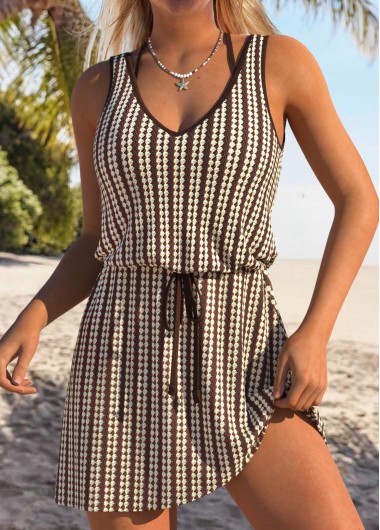

Another good purchase
 MODLILY CLUB
% Off
MODLILY CLUB
% Off
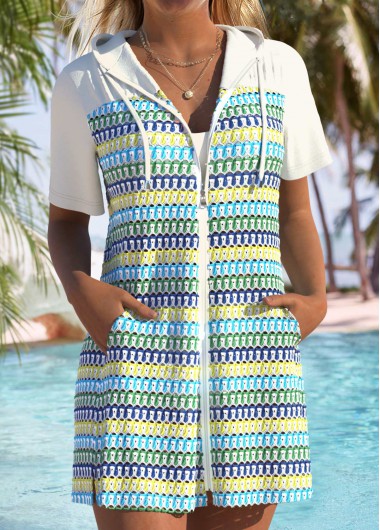
This is perfect for throwing over my bathers…love it.
MODLILY CLUB
% Off

Love it! Nice coverup
MODLILY CLUB
% Off

Perfect
MODLILY CLUB
% Off
 MODLILY CLUB
% Off
MODLILY CLUB
% Off
 MODLILY CLUB
% Off
MODLILY CLUB
% Off
 MODLILY CLUB
% Off
MODLILY CLUB
% Off
 MODLILY CLUB
% Off
MODLILY CLUB
% Off
 MODLILY CLUB
% Off
MODLILY CLUB
% Off
 MODLILY CLUB
% Off
MODLILY CLUB
% Off
 MODLILY CLUB
% Off
MODLILY CLUB
% Off
 MODLILY CLUB
% Off
MODLILY CLUB
% Off
 MODLILY CLUB
% Off
MODLILY CLUB
% Off
 MODLILY CLUB
% Off
MODLILY CLUB
% Off
 MODLILY CLUB
% Off
MODLILY CLUB
% Off
 MODLILY CLUB
% Off
MODLILY CLUB
% Off
 MODLILY CLUB
% Off
MODLILY CLUB
% Off
 MODLILY CLUB
% Off
MODLILY CLUB
% Off
 MODLILY CLUB
% Off
MODLILY CLUB
% Off
 MODLILY CLUB
% Off
MODLILY CLUB
% Off
 MODLILY CLUB
% Off
MODLILY CLUB
% Off
 MODLILY CLUB
% Off
MODLILY CLUB
% Off
 MODLILY CLUB
% Off
MODLILY CLUB
% Off
 MODLILY CLUB
% Off
MODLILY CLUB
% Off
 MODLILY CLUB
% Off
MODLILY CLUB
% Off
 MODLILY CLUB
% Off
MODLILY CLUB
% Off
 MODLILY CLUB
% Off
MODLILY CLUB
% Off
 MODLILY CLUB
% Off
MODLILY CLUB
% Off
 MODLILY CLUB
% Off
MODLILY CLUB
% Off
 MODLILY CLUB
% Off
MODLILY CLUB
% Off
 MODLILY CLUB
% Off
MODLILY CLUB
% Off
 MODLILY CLUB
% Off
MODLILY CLUB
% Off
 MODLILY CLUB
% Off
MODLILY CLUB
% Off
 MODLILY CLUB
% Off
MODLILY CLUB
% Off
 MODLILY CLUB
% Off
MODLILY CLUB
% Off
 MODLILY CLUB
% Off
MODLILY CLUB
% Off
 MODLILY CLUB
% Off
MODLILY CLUB
% Off
 MODLILY CLUB
% Off
MODLILY CLUB
% Off
 MODLILY CLUB
% Off
MODLILY CLUB
% Off
 MODLILY CLUB
% Off
MODLILY CLUB
% Off
 MODLILY CLUB
% Off
MODLILY CLUB
% Off
 MODLILY CLUB
% Off
MODLILY CLUB
% Off
 MODLILY CLUB
% Off
MODLILY CLUB
% Off
 MODLILY CLUB
% Off
MODLILY CLUB
% Off
 MODLILY CLUB
% Off
MODLILY CLUB
% Off
 MODLILY CLUB
% Off
MODLILY CLUB
% Off
 MODLILY CLUB
% Off
MODLILY CLUB
% Off
 MODLILY CLUB
% Off
MODLILY CLUB
% Off
 MODLILY CLUB
% Off
MODLILY CLUB
% Off
 MODLILY CLUB
% Off
MODLILY CLUB
% Off
 MODLILY CLUB
% Off
MODLILY CLUB
% Off
 MODLILY CLUB
% Off
MODLILY CLUB
% Off
 MODLILY CLUB
% Off
MODLILY CLUB
% Off

There is an important distinction here, and it decides whether a suit is wearable or not.
A suit made from genuinely sheer fabric throughout is a photographic garment rather than swimwear. It goes translucent in water, offers no support, and cannot be worn anywhere with other people. Nothing in this range works that way.
What does work is sheer used as placement — a mesh insert at the waist, a net panel across the shoulder, a sheer overlay above a lined bust. The transparency becomes a design line rather than a coverage problem, because the parts that need to be opaque are opaque. That is the difference between sheer swimwear built around placement and a suit that is simply under-lined.
Placement is the whole design decision, and three positions account for most of what is made.
At the waist or ribcage — the most common, and the most flattering. A mesh band at the narrowest point creates definition and breaks the silhouette without exposing anything structural. It works like a cut-out but with fabric still there.
Across the décolletage — a sheer panel above a lined cup, which reads as a higher neckline from a distance while showing skin close up. Needs the cup below to be properly structured.
At the back or shoulder — the most practical position, since nothing at the front changes. Similar in effect to an open back but with the fabric intact.
Listings sometimes say see through swimwear or transparent swimwear, but a suit built this way is opaque where it counts and sheer only where it is meant to be.
Mesh itself does, provided it is proper swim mesh rather than fashion netting. Swim mesh is a knitted nylon or polyester with elastane, and it behaves like the rest of the suit — springs back, dries quickly, holds its shape.
Two things to check. First, whether the panel is under tension: a mesh insert placed across a curve stretches when you move, and thin netting distorts permanently where swim mesh does not. Second, whether the lined sections are fully lined rather than bust-lined only, since a sheer detail draws attention to any part of the suit that is thinner than it should be.
Chlorine is harder on mesh than on solid fabric because there is more surface area per gram. Rinsing in cool fresh water immediately after swimming matters more here than on a plain suit.
One more practical note: mesh snags. It catches on jewelry, rough pool edges and the velcro on beach bags in a way solid swim fabric does not. If a suit has a large mesh section, treat it slightly more carefully than a plain one — sit on a towel rather than directly on concrete, and take rings off before pulling it on.
Since the question behind most of these searches is one of degree, here is the order, from least revealing to most.
The mildest version is mesh laid over a lining — what shows through is fabric rather than skin, and the effect is texture instead of transparency. Next comes a mesh insert with nothing behind it, placed somewhere structural such as the waist or the upper back, where a cut-out would otherwise sit. Above that sits a sheer overlay running across a larger area, with the lined sections still doing all the covering underneath. Beyond that is an unlined sheer body, which is the point at which swimwear stops functioning as swimwear.
This range stops at the third step: mesh is a placement here, never the whole garment. What to check on any individual style is whether the lined sections are lined throughout rather than at the cups only, because that is what decides whether a sheer detail stays a detail once it is wet. For the mildest end of the effect, a black suit with a lined mesh panel shows the placement most sharply and changes least in the water.
A suit with sheer detailing is already doing something, so everything around it should be plain.
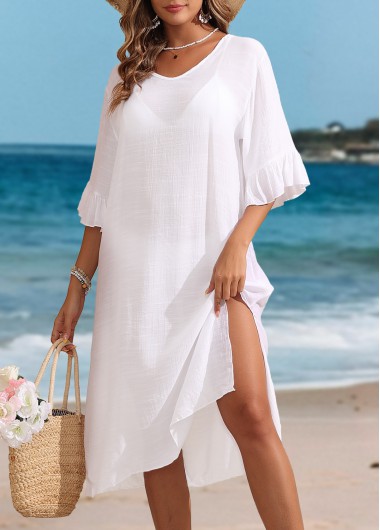
A solid cover-up in black or cream works; a printed one competes for attention. For the suit itself, black shows mesh placement most clearly, because the contrast between opaque and sheer reads sharply — the same panel in a pale color is considerably subtler.
If you want the visual break without any transparency, our ruched styles create definition through gathering instead, and panel-seamed one pieces do it through construction lines. Both achieve a similar effect with full coverage throughout.

Create Account
Create password to get more coupons!
$100 OFF
New Members only!
Create Account
Create password to get more coupons!
$100 OFF
New Members only!
$20 OFF
for text subscribe

*It includes 4 coupons
Expired:
CODE:
Expired:
Fast Self-Service for Facebook Users.
24/7 online service available to all customers.
To avoid waiting time online, you could submit a ticket to us, our agent will respond within 1 business day.