



Fast Self-Service for Facebook Users.
24/7 online service available to all customers.
To avoid waiting time online, you could submit a ticket to us, our agent will respond within 1 business day.


Fast Self-Service for Facebook Users.
24/7 online service available to all customers.
To avoid waiting time online, you could submit a ticket to us, our agent will respond within 1 business day.
Sign In / Register
My Balance
Modlily Club
Sign in for the best experience
Processing
 Multi Color
Blue
Navy Blue
Cyan
Red
Hot Pink
White
Green
Grey
Pink
Beige
Yellow
Brown
Orange
Purple
Coral
Multi Color
Blue
Navy Blue
Cyan
Red
Hot Pink
White
Green
Grey
Pink
Beige
Yellow
Brown
Orange
Purple
Coral Please enter a valid number

 MODLILY CLUB % Off
 MODLILY CLUB % Off
 MODLILY CLUB % Off
 MODLILY CLUB % Off
 MODLILY CLUB % Off
 MODLILY CLUB % Off
 MODLILY CLUB % Off
 MODLILY CLUB % Off
 MODLILY CLUB % Off
 MODLILY CLUB % Off
 MODLILY CLUB % Off
 MODLILY CLUB % Off
 MODLILY CLUB % Off
 MODLILY CLUB % Off
 MODLILY CLUB % Off
 MODLILY CLUB % Off
 MODLILY CLUB % Off
 MODLILY CLUB % Off
 MODLILY CLUB % Off
 MODLILY CLUB % Off
 MODLILY CLUB % Off
 MODLILY CLUB % Off
 MODLILY CLUB % Off
 MODLILY CLUB % Off
 MODLILY CLUB % Off
 MODLILY CLUB % Off
 MODLILY CLUB % Off
 MODLILY CLUB % Off
 MODLILY CLUB % Off
 MODLILY CLUB % Off
 MODLILY CLUB % Off
 MODLILY CLUB % Off
 MODLILY CLUB % Off
 MODLILY CLUB % Off
 MODLILY CLUB % Off
 MODLILY CLUB % Off
 MODLILY CLUB % Off
 MODLILY CLUB % Off
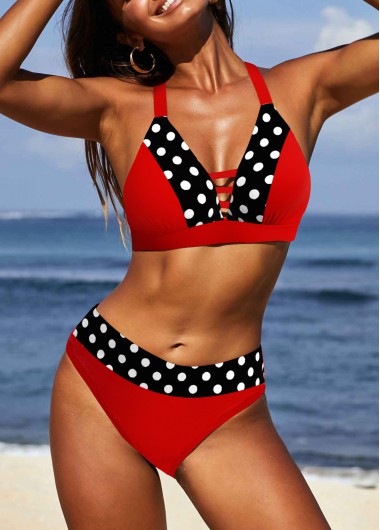 MODLILY CLUB % Off
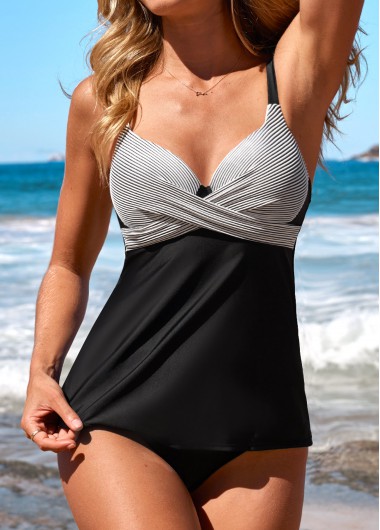 MODLILY CLUB % Off
 MODLILY CLUB % Off
 MODLILY CLUB % Off
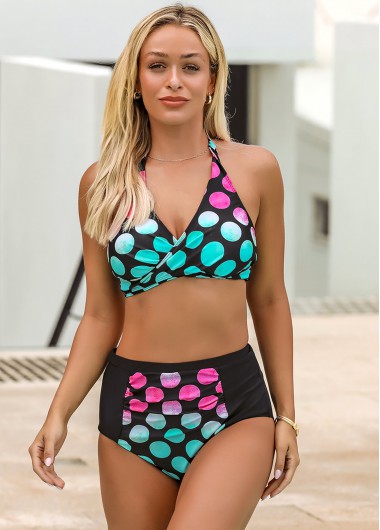 MODLILY CLUB % Off
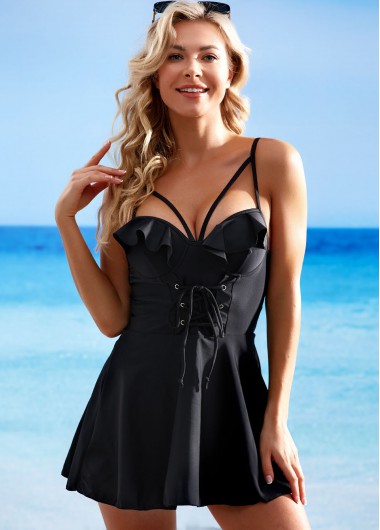 MODLILY CLUB % Off
 MODLILY CLUB % Off
 MODLILY CLUB % Off
They do, but not in the form most people picture. A push-up bra lifts by angling a firm pad inward and upward against a rigid frame. A swimsuit cannot use that frame, because the whole garment has to stretch to get on, stay put in water, and dry afterwards.
What swimwear uses instead is a molded cup — a shaped, pre-formed layer that holds its curve whether it is wet or dry — sitting on a firm underband. The effect is real, but it comes from the shape of the cup rather than from the amount of foam behind it. This is why two tops with identical padding can perform completely differently.
Two things predict what push up swimwear actually does, and one does not.
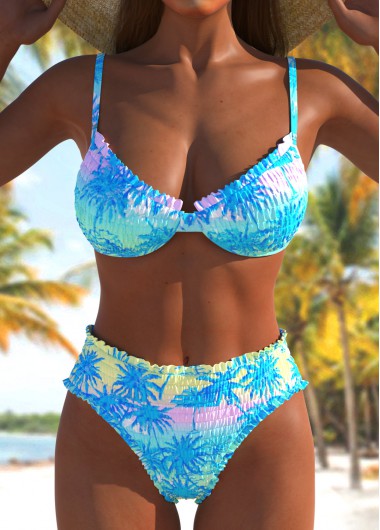
Our push up bikini page goes through the mechanics properly, including what to make of the cup-size figures some brands quote.
This category is written almost entirely for people who want more, and its two ends need opposite things. Shape rather than lift is the objective at the smaller end, and that is a different construction — our smaller bust range is built around it. At the fuller end the wire and the band come before padding of any thickness; see large bust styles and underwire construction.
The part that decides whether a push-up suit is still working an hour in, and no product page mentions it.
Foam takes on water. A thick insert holds it, gets heavy, and pulls down against the lift it was there to create — which is why a suit that looked right in the mirror sits lower after one swim. Molded cups do better because the shape is formed into the fabric rather than sitting behind it.
Trapped air is the opposite problem. A deep molded cup can hold a pocket of air as you go under, lifting away from the body for a few seconds before it collapses. Neither is a fault — both are just worth knowing before judging a suit on its first thirty seconds.
Drying is where thickness costs most. A thick foam cup stays damp long after the rest has dried, and going back on damp is what flattens it for good.
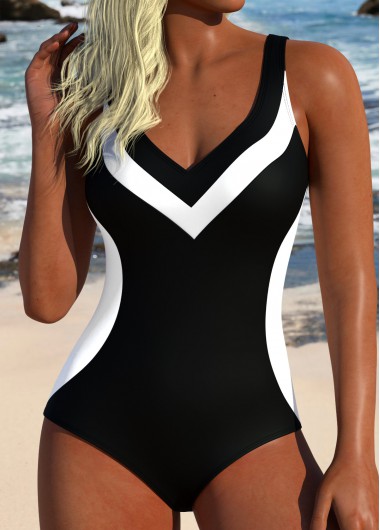
A one piece changes the mechanics, and it catches people out after a bikini top has worked fine.
On a two-piece the band is its own garment — you tighten it and the cups sit where you put them. On a one piece the band is part of a panel running all the way to the hip, held in tension by the whole length of your torso. A long torso stretches that panel and carries the cups down with it. The cup then sits below where it was drafted to, and no amount of foam corrects that: it is a position problem, not a volume one.
So strap adjustment is the first thing to check, not the last. A shorter torso has the opposite issue: the cup rides high and gaps along the top edge.
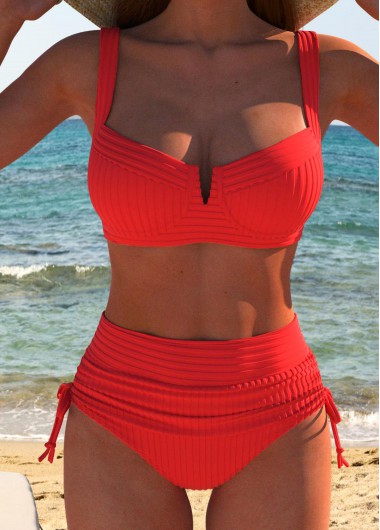
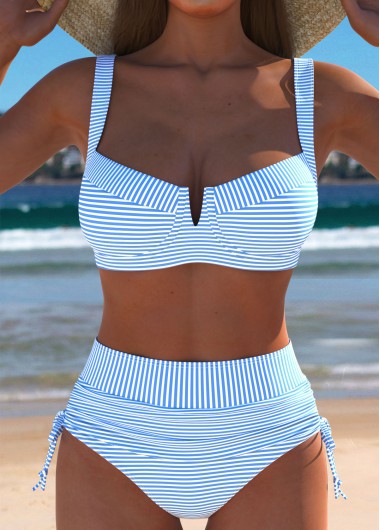
A common pairing, and it works because the two solve unrelated problems. Lift comes from the cup and band at the top; smoothing comes from a ruched front over a lining layer through the middle. Neither interferes with the other, so a one-piece can carry both at once — see tummy control styles. In a two-piece, pair a structured top with a high waisted bottom and you get the same result with independent sizing. Bikini-specific versions sit in the push up bikini range.

Create Account
Create password to get more coupons!
$100 OFF
New Members only!
Create Account
Create password to get more coupons!
$100 OFF
New Members only!
$20 OFF
for text subscribe

*It includes 4 coupons
Expired:
CODE:
Expired:
Fast Self-Service for Facebook Users.
24/7 online service available to all customers.
To avoid waiting time online, you could submit a ticket to us, our agent will respond within 1 business day.