



Fast Self-Service for Facebook Users.
24/7 online service available to all customers.
To avoid waiting time online, you could submit a ticket to us, our agent will respond within 1 business day.


Fast Self-Service for Facebook Users.
24/7 online service available to all customers.
To avoid waiting time online, you could submit a ticket to us, our agent will respond within 1 business day.
Sign In / Register
My Balance
Modlily Club
Sign in for the best experience
Processing
Please enter a valid number
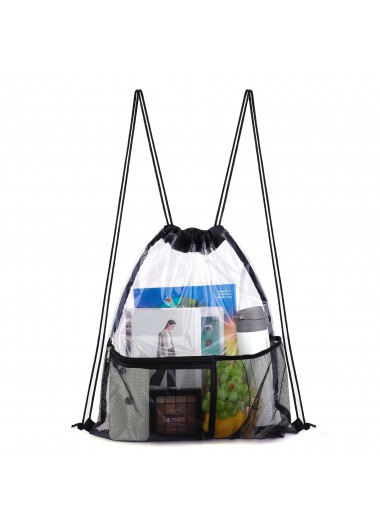

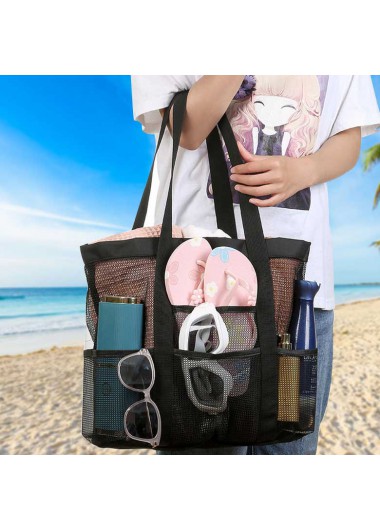
This came as a bonus gift with my purchase. Ballgames in my area have a clear bag policy. It's a great size and the front pockets are also convenient. I fill 3 gallon size ziplocbags, 2 with snacks, one with a few drinks and a small ice pack. All of that fits!! I've used it for a few weeks. It's holding up really well.
 MODLILY CLUB
% Off
MODLILY CLUB
% Off
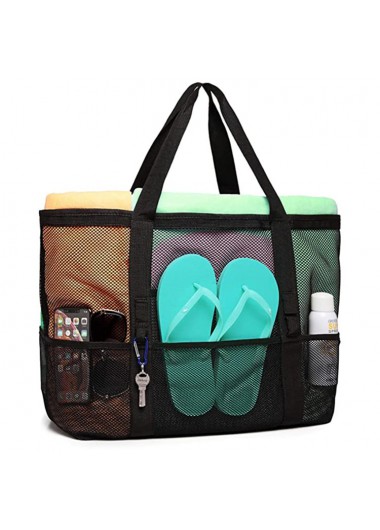
Very handy for when I go to the beach and when I go to the pool carrying all my stuff and everybody else's stuff.
MODLILY CLUB
% Off
 MODLILY CLUB
% Off
MODLILY CLUB
% Off

Both are sold as a wet bag for swimwear and they are built on opposite principles, so it is worth knowing which one you are buying.
A sealed bag uses a waterproof lining and a closure that keeps water inside. Its whole purpose is protecting everything around it — the clothes in your case, the book in your tote, the car seat on the way home. The suit inside stays soaking, which is fine for an hour and a problem for a day.
A draining bag does the reverse. Mesh or open construction lets water run out and air move through, so the suit begins drying from the moment it goes in. Nothing is protected from the drips, but the suit comes out damp rather than sodden.
What we carry is the second kind — mesh and open-top styles built to drain and breathe. If you need something genuinely watertight for a suitcase, that is a different product and worth buying as one.
The reason draining matters more than most people expect, and it has nothing to do with smell.
Elastane loses its recovery when it sits wet and warm, and chlorine keeps reacting with the fibres the entire time it stays in them. A suit left balled up in a sealed bag for a day is exposed to that far longer than the swim itself lasted. It comes back with the leg openings looser and the front slightly bagged, and nothing restores it.
Salt does the same thing by a different route. As seawater evaporates it leaves crystals in the weave, and those crystals abrade the fibres from the inside every time the fabric flexes. Sealed in, the water never evaporates and the salt never has anywhere to go.
So the useful sequence is short: rinse in cold fresh water, wring gently rather than twisting, then into something that breathes. A sealed bag is for the twenty minutes between the pool and the car, not for the trip home.
A wet-dry bag is a different format again: one waterproof section for whatever comes out of the water, one breathable section for what has to stay dry, divided down the middle.
The appeal is obvious — one bag instead of two, and nothing damp against a phone or a dry change of clothes. The catch is that the wet side is almost always fully sealed, which is exactly the problem described above. It is a good format for the twenty minutes between the pool and the car, and a poor one for a suit that will sit in there until evening.
Which makes one question worth asking of any of them: does that wet compartment open out and air on its own, or only through the main closure? The ones that do are worth the extra; the ones that do not are a tidier way of doing the wrong thing.
Ranked by how much difference each makes in practice.
Beyond the bag itself, keeping two suits in rotation does more for how long either one lasts than any storage decision — see the full swimwear range, or the affordable range if a second suit is the point. Anything in a bright shade benefits most, since neon and orange fade fastest when left damp. A cover-up to change under makes the whole routine quicker at a public pool.

Create Account
Create password to get more coupons!
$100 OFF
New Members only!
Create Account
Create password to get more coupons!
$100 OFF
New Members only!
$20 OFF
for text subscribe

*It includes 4 coupons
Expired:
CODE:
Expired:
Fast Self-Service for Facebook Users.
24/7 online service available to all customers.
To avoid waiting time online, you could submit a ticket to us, our agent will respond within 1 business day.