



Fast Self-Service for Facebook Users.
24/7 online service available to all customers.
To avoid waiting time online, you could submit a ticket to us, our agent will respond within 1 business day.


Fast Self-Service for Facebook Users.
24/7 online service available to all customers.
To avoid waiting time online, you could submit a ticket to us, our agent will respond within 1 business day.
Sign In / Register
My Balance
Modlily Club
Sign in for the best experience
Processing
 Multi Color
Gold
Multi Color
Gold Please enter a valid number
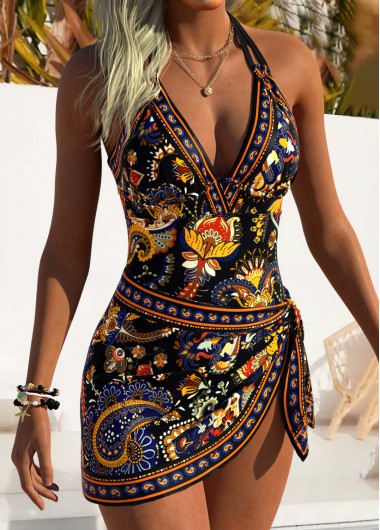

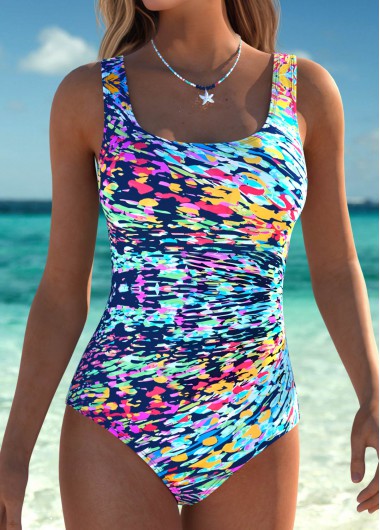
Beautiful pattern, good quality suit. Love the matching sarong
 MODLILY CLUB
% Off
MODLILY CLUB
% Off

What girl doesn't lover summer shimmer. I paired this with a black n leopard sparkled swimsuit and it was stunning. Most people didnt realize it was my swimwear.
MODLILY CLUB
% Off

Nobody selling these explains it, which is odd given it is the only thing separating sarong cover ups for swimwear from a piece of cloth. All four start the same way: hold the fabric behind you with a roughly equal amount in each hand.
A knot slips as soon as the fabric is at all slippery. A twist before knotting, or tucking the tail under the wrap, holds far better than pulling the knot tighter.
The same garment under two names, which is worth knowing because retailers file them separately and you can miss half the stock by searching one word.
Sarong comes from Southeast Asia and pareo from Tahiti, and both describe an untailored rectangle worn wrapped. Some sellers use pareo for the lighter, more decorative versions and sarong for everything else, but the distinction is not consistent anywhere. If a listing has neither word, look for wrap or beach wrap.
Two decisions, and the fabric is the one people get wrong.
Length. A short sarong reaches mid-thigh and works only as a skirt. A long one reaches the ankle and can do all four ties above, which makes it the more useful buy if you are only taking one. Width matters as much as length for the dress ties — a narrow piece will not meet around the chest.
Fabric. This decides whether it works once you are damp. A light woven fabric — cotton voile, viscose, chiffon — dries fast and falls away from the body. A heavier or clingy knit sticks to wet skin, which defeats the purpose entirely and is the most common complaint about these. Test it by how it drapes rather than how it photographs.
Color is the easy part: a plain sarong goes over any print, while a printed one needs a plain suit underneath.
A sarong is designed flat and photographed flat, and then you wrap it. The two do not look alike, and the gap is widest on a border print.
Where the pattern is concentrated along one edge, that edge becomes the hem when the cloth is worn as a skirt, sits across the chest when it is tied as a dress, and runs diagonally over the body on the one-shoulder tie. The same piece of fabric gives three completely different results, and only one of them is the one in the photograph.
Directional prints behave the same way. Palm leaves and stripes have a right way up, and wrapping turns half the cloth over almost every time.
So decide which tie you will actually use most, then look at where the pattern sits relative to that edge. Flat appeal and worn appeal are different things here in a way they are not for a printed swimsuit.
A sarong covers from the waist down and leaves the shoulders open, which suits a day where sun is not the main concern. If it is, a kaftan or tunic covers the upper body instead, and matched sets arrive with the suit and the layer already coordinated. Underneath, a bikini works best since the sarong handles the coverage, and the swim tops range sells halves separately.

Create Account
Create password to get more coupons!
$100 OFF
New Members only!
Create Account
Create password to get more coupons!
$100 OFF
New Members only!
$20 OFF
for text subscribe

*It includes 4 coupons
Expired:
CODE:
Expired:
Fast Self-Service for Facebook Users.
24/7 online service available to all customers.
To avoid waiting time online, you could submit a ticket to us, our agent will respond within 1 business day.