



Fast Self-Service for Facebook Users.
24/7 online service available to all customers.
To avoid waiting time online, you could submit a ticket to us, our agent will respond within 1 business day.


Fast Self-Service for Facebook Users.
24/7 online service available to all customers.
To avoid waiting time online, you could submit a ticket to us, our agent will respond within 1 business day.
Sign In / Register
My Balance
Modlily Club
Sign in for the best experience
Processing
Please enter a valid number

 MODLILY CLUB
% Off
MODLILY CLUB
% Off

Cotton is one of the best fabrics for printing. Its natural fibers absorb ink and dye readily, so prints look rich and colors stay deep. That is why so many printed tees are made from cotton or cotton-heavy blends.
The type of print affects how it feels. Water-based and discharge inks soak into cotton fibers, leaving a soft print you can barely feel. Plastisol inks sit on top of the fabric, creating a slightly raised, glossy print that is very durable but less breathable.
Direct-to-garment printing works like an inkjet printer for fabric, applying detailed images directly onto cotton. It suits complex designs with many colors and feels soft to the touch.
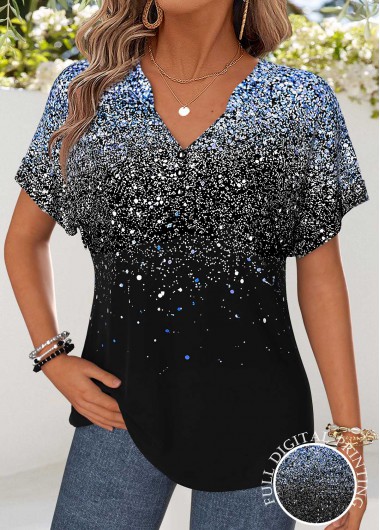
All-over prints, where the pattern covers the whole shirt, are usually printed onto the fabric before it is cut and sewn. On cotton, they look even and natural.
100 percent cotton graphic tees take prints especially well, because there are no synthetic fibers to resist the ink. Prints on pure cotton often soften and fade slightly over time, which gives them a lived-in, vintage feel.
Printed areas can feel slightly stiffer than the rest of the shirt at first, but they soften with washing. A large print adds a layer of ink across the chest, which also makes that area a little warmer and more opaque.
The quality of a print also depends on how long it was cured. A well-cured print survives many washes without cracking; a poorly cured one can peel early.
Print placement changes how the shirt wears. A centered chest print stays flat and visible; an all-over print moves with the fabric and hides creases well. Prints near seams or across the underarm can crack sooner because those areas stretch the most.
Color of the base shirt matters too. Light cotton makes printed colors look bright and clear, while dark cotton needs an underbase layer of ink for the print to stand out, which can make the print feel slightly thicker.
Pure cotton and cotton blends each have strengths for printed tees. Pure cotton feels soft and natural, breathes well and gives prints a matte, deep color. It is the best choice for warm weather and for those who prefer natural fibers.
Cotton-polyester blends hold their shape better and resist shrinking, which helps prints keep their proportions after many washes. Colors on blends often look slightly brighter, and the fabric dries faster.
Blends with a little spandex stretch more, which suits fitted printed tees. The print stretches with the fabric, so a flexible ink is important to avoid cracking.
Tri-blends give prints a soft, faded look from the start, because the mix of fibers takes ink unevenly. Many people love this effect for vintage-style prints.
For care, wash printed cotton tees inside out in cold water and dry on low heat or air dry. High heat can shrink cotton and crack prints. Avoid ironing directly on the print; iron on the reverse side instead.
Choose based on how you wear the tee. For hot days and relaxed weekends, pure cotton feels coolest and most natural. On trips and during busy weeks, a blend resists wrinkles and dries faster, so it looks neat straight from the suitcase. For a close fit, a blend with stretch keeps the print smooth when you move.
Whatever the fabric, the print should feel flexible when you stretch the shirt gently. A print that feels hard or tight at first will soften a little with washing, but one that cracks when stretched is likely to wear poorly.
For more on cotton, see cotton T-shirts; for prints and styling, graphic T-shirts; for vintage-style softness, vintage graphic tees; and for soft fabrics, soft T-shirts.

Create Account
Create password to get more coupons!
$100 OFF
New Members only!
Create Account
Create password to get more coupons!
$100 OFF
New Members only!
$20 OFF
for text subscribe

*It includes 4 coupons
Expired:
CODE:
Expired:
Fast Self-Service for Facebook Users.
24/7 online service available to all customers.
To avoid waiting time online, you could submit a ticket to us, our agent will respond within 1 business day.