



Fast Self-Service for Facebook Users.
24/7 online service available to all customers.
To avoid waiting time online, you could submit a ticket to us, our agent will respond within 1 business day.


Fast Self-Service for Facebook Users.
24/7 online service available to all customers.
To avoid waiting time online, you could submit a ticket to us, our agent will respond within 1 business day.
Sign In / Register
My Balance
Modlily Club
Sign in for the best experience
Processing
Please enter a valid number


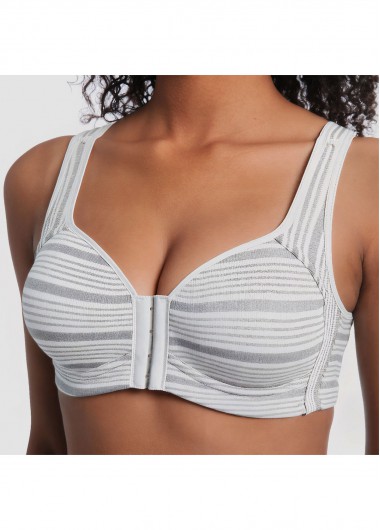
Comfortable, easy to hook, comfortable and sexy!! I feel pretty.
 MODLILY CLUB
% Off

Comfortable to wear
MODLILY CLUB
% Off

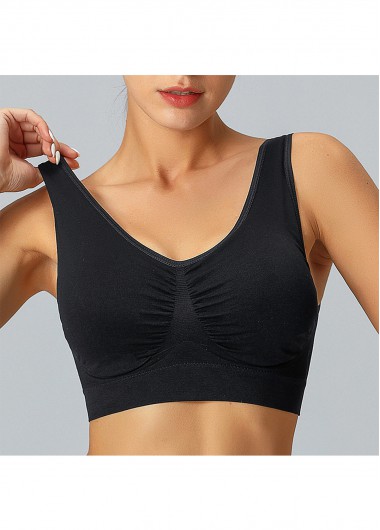
Fits like a sports bra but looks attractive and fits great as a push up bra.
MODLILY CLUB
% Off

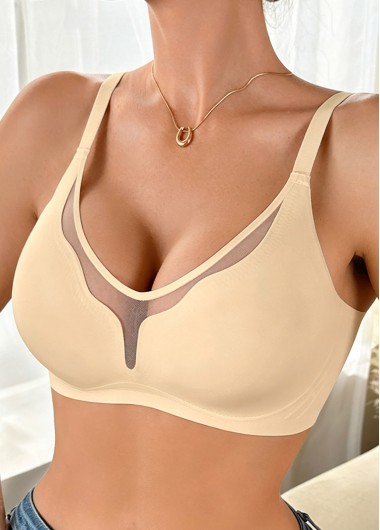
Beautiful soft pergect
MODLILY CLUB
% Off
 MODLILY CLUB
% Off
 MODLILY CLUB
% Off
 MODLILY CLUB
% Off
 MODLILY CLUB
% Off
 MODLILY CLUB
% Off
 MODLILY CLUB
% Off
 MODLILY CLUB
% Off
 MODLILY CLUB
% Off
 MODLILY CLUB
% Off
 MODLILY CLUB
% Off
 MODLILY CLUB
% Off
 MODLILY CLUB
% Off
 MODLILY CLUB
% Off
 MODLILY CLUB
% Off
 MODLILY CLUB
% Off
 MODLILY CLUB
% Off
 MODLILY CLUB
% Off
 MODLILY CLUB
% Off
 MODLILY CLUB
% Off
 MODLILY CLUB
% Off
 MODLILY CLUB
% Off
 MODLILY CLUB
% Off
 MODLILY CLUB
% Off
 MODLILY CLUB
% Off
 MODLILY CLUB
% Off
 MODLILY CLUB
% Off
 MODLILY CLUB
% Off
 MODLILY CLUB
% Off
 MODLILY CLUB
% Off
 MODLILY CLUB
% Off
 MODLILY CLUB
% Off
 MODLILY CLUB
% Off
 MODLILY CLUB
% Off
 MODLILY CLUB
% Off
 MODLILY CLUB
% Off
 MODLILY CLUB
% Off

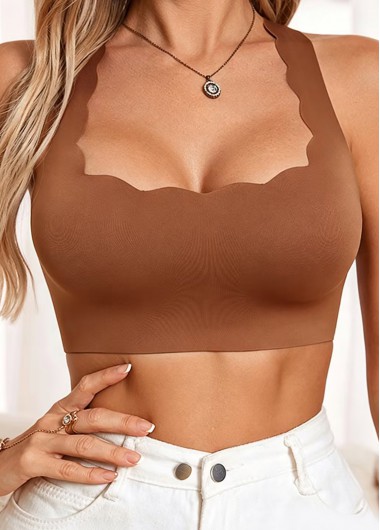
Wire-free styles come in several cup shapes and levels of coverage. A wireless bra still needs a way to create cup space, connect the cups to the body of the garment, and get onto the wearer. Those decisions explain why two wire-free pieces can feel quite different. This is a guide to reading that construction; for everyday containment, compare support bras as well.
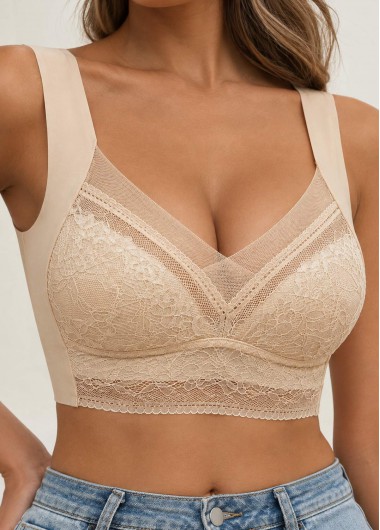
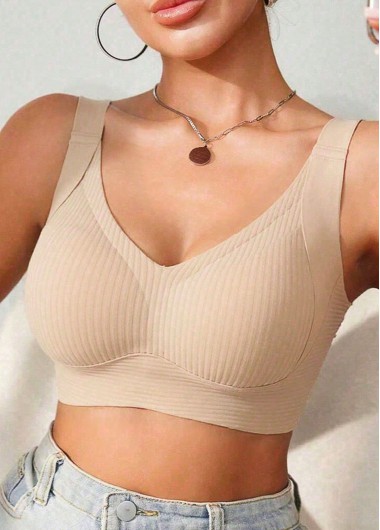
Some cups hold a visible contour even when empty. Others take their shape mainly from the body inside them. That difference can affect the outline you see beneath clothing. It also affects how you compare photographs: a preformed cup can appear more defined in a flat image than a softer fabric cup that needs to be worn to show its intended shape.
Neither approach establishes a padding level on its own. Cup construction can create a rounded outline with different amounts of inner padding. When a profile appeals to you, look for the detail that creates it instead of assuming the outside view reveals every layer.
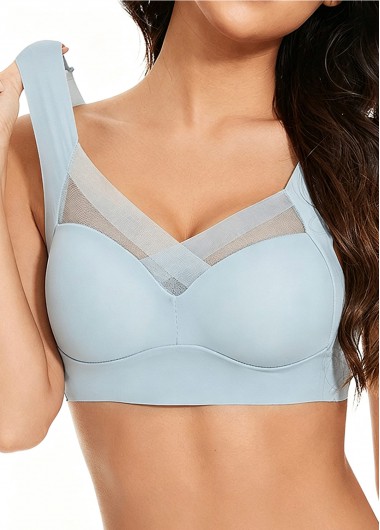
A seam can join sections of fabric that meet at different angles. That can provide depth or direction within a cup. The presence of stitching is therefore not necessarily a decorative choice, nor is a smooth-looking surface the only way to form a wire-free garment.
Seam position also changes how the surface interacts with clothing. A line placed where a fitted top touches the bust may show differently from one near an edge. This is where seamless wireless bras becomes the narrower question: how a smooth-looking finish is achieved and which joins remain, rather than whether there is a wire underneath.
Look at the portion of the garment that extends below and beside the cups. A shorter band and a deeper body cover different areas of the torso. The second may meet the waist of high-rise clothing or fold where the body bends. More fabric is a different design choice, not an automatic improvement for every wearer.
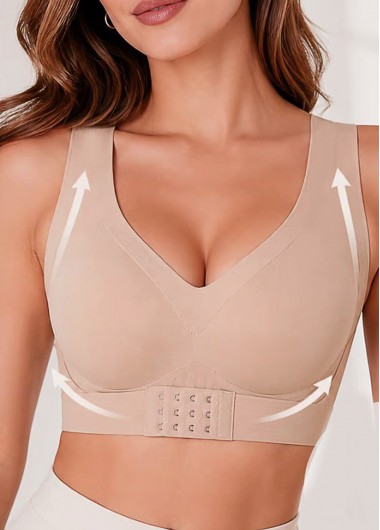
The relationship between cup fabric and lower band is useful to notice. If the whole garment stretches as one continuous piece, the pull-on action may feel different from fastening a defined band after the cups are in place. Compare the actual opening and materials described for the item. The band, cups, and straps work together to create the finished feel.
For questions about pressure at a lower edge during a seated day, comfortable bras is the more focused destination. Here the point is to identify which area of the body a design covers before deciding whether that arrangement suits your routine.
A pull-on garment must pass over the part of the body used to put it on. Consider whether you prefer dressing over the head or another method permitted by the design. A piece that feels pleasant once positioned may still be awkward to get into, so the opening deserves as much attention as the neckline.
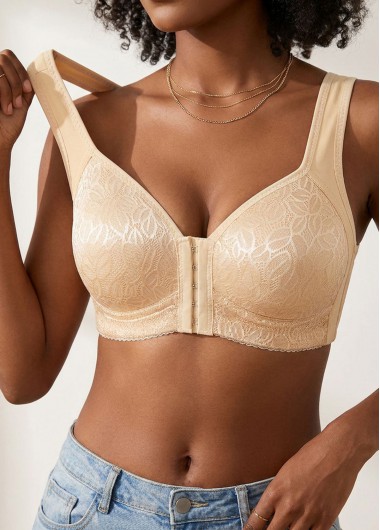
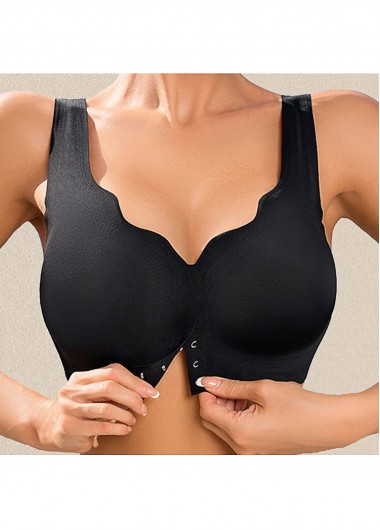
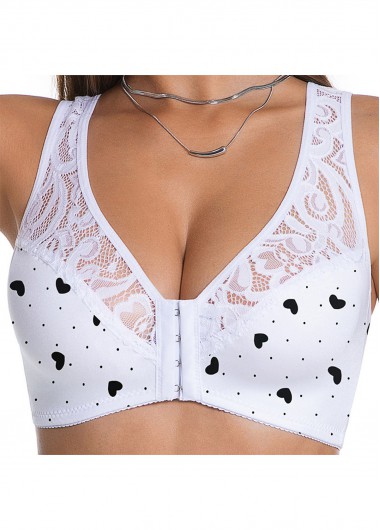
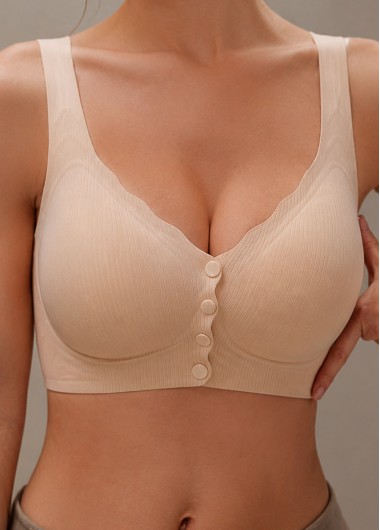
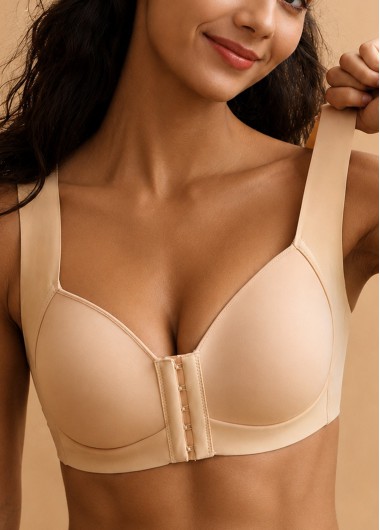
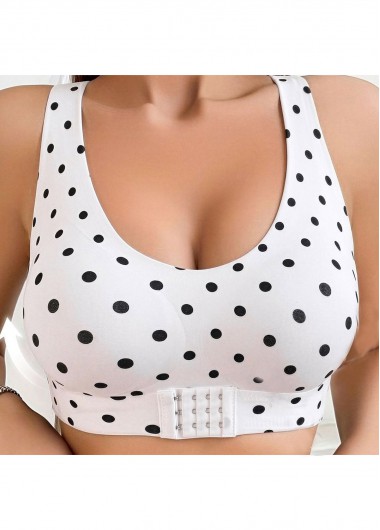
A clasp provides a different sequence: position the cups, bring the band around, and fasten it as intended. Front and back closures place the fastening in different locations, while adjustable and fixed arrangements provide different options. Compare those features in the particular wire-free style you like.
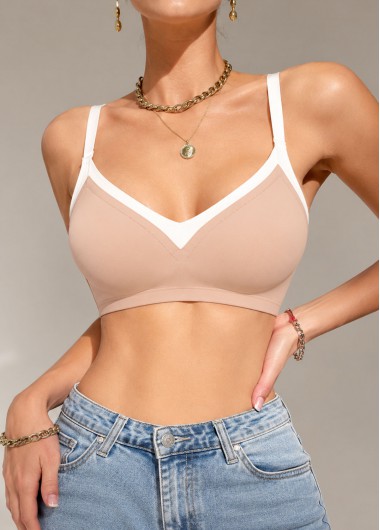
Shoulder straps can also be fixed or adjustable. A product photograph may show their route without showing an adjustment mechanism. If strap length is important to you, establish how it is handled before choosing. Soft construction feels most comfortable when the garment's proportions suit your shoulders and torso.
A wire-free cup can have an insert, a thin internal layer, or a softer fabric surface. Read lining information independently of the wire description. Lightly lined bras considers the modest-layer preference, which may overlap with wireless construction without defining it.
You can now describe the garment you are comparing more precisely: a soft or preformed cup, a seamed or smoother surface, a shorter or deeper body, a pull-on opening or a closure. Those details turn a broad construction preference into a useful comparison. Two pieces can share the word wireless while offering different answers to almost every one of those questions.

Create Account
Create password to get more coupons!
$100 OFF
New Members only!
Create Account
Create password to get more coupons!
$100 OFF
New Members only!
$20 OFF
for text subscribe

*It includes 4 coupons
Expired:
CODE:
Expired:
Fast Self-Service for Facebook Users.
24/7 online service available to all customers.
To avoid waiting time online, you could submit a ticket to us, our agent will respond within 1 business day.