



Fast Self-Service for Facebook Users.
24/7 online service available to all customers.
To avoid waiting time online, you could submit a ticket to us, our agent will respond within 1 business day.


Fast Self-Service for Facebook Users.
24/7 online service available to all customers.
To avoid waiting time online, you could submit a ticket to us, our agent will respond within 1 business day.
Sign In / Register
My Balance
Modlily Club
Sign in for the best experience
Processing
Please enter a valid number


Love these! I wish they came in more colors!
 MODLILY CLUB
% Off
 MODLILY CLUB
% Off
 MODLILY CLUB
% Off
 MODLILY CLUB
% Off

Very comfortable and great fabric!
MODLILY CLUB
% Off
 MODLILY CLUB
% Off
 MODLILY CLUB
% Off
 MODLILY CLUB
% Off
 MODLILY CLUB
% Off
 MODLILY CLUB
% Off
 MODLILY CLUB
% Off
 MODLILY CLUB
% Off
 MODLILY CLUB
% Off
 MODLILY CLUB
% Off
 MODLILY CLUB
% Off
 MODLILY CLUB
% Off
 MODLILY CLUB
% Off
 MODLILY CLUB
% Off

Hiking shorts can refer to specialist outdoor clothing or to ordinary shorts someone hopes to use on a walk. The difference matters before you rely on a particular feature. Terrain, weather, the duration of your outing, and the things you need to carry all affect the brief. Use the selected product’s stated details to match your shorts with the route you plan.
A longer hem changes how much of the leg is covered, but its position near the knee deserves attention during a step. Picture lifting a foot onto a higher surface as well as walking on level pavement. You want a length and shape that make sense for the movements you expect, without assuming that every longer garment has the same freedom around the knee.
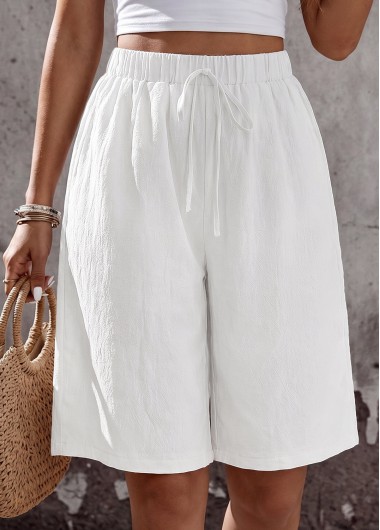
Long Shorts provide a broader discussion of coverage. For an outdoor plan, connect that preference to the route itself. A short stroll with frequent stops and a more demanding trail are different occasions. Choosing a familiar length is useful, but the cut, measurements, and documented purpose of the garment still need to support your intended use.
The space through the thigh is another separate consideration. A hem may land where you want while the upper leg feels too restricted. Check the hip and thigh information available in the listing, and compare it with clothing you already move comfortably in. A longer hem feels most useful when the waist and hip fit suit you too.
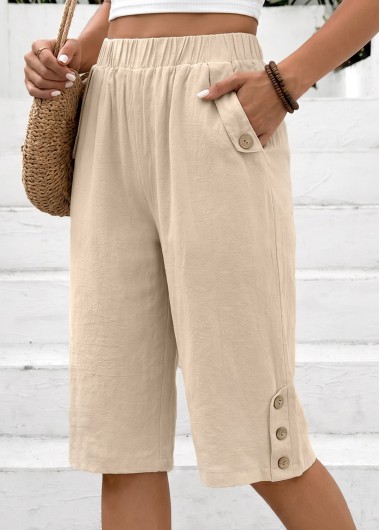
If you like coverage closer to the knee, Knee Length Shorts offer a more focused reference point. Keep that length discussion separate from technical outdoor claims. A casual knee-length pair can suit an everyday outfit without automatically being the right equipment for every surface, climate, or extended outing.
Pocket needs become clearer when you list what you actually want to carry. A key, a small card, and a phone have different shapes and weights. A pocket that holds one of those items comfortably may not be suitable for all three. Look at placement and any stated closure alongside the pocket layout you prefer.
A zipper or another fastening should be explicitly shown or described if it matters to your plans. A pocket with a stated closure can be useful when you want to carry a small item on the trail. The individual garment details should settle those questions before you depend on the pocket for an important belonging.
Shorts with pockets explain pocket construction in a general clothing context. Think about how you will use the pockets as you move along your route. Carrying too much in a garment can also change its outline and feel, so consider whether another bag is more suitable for some items.
Try separating the essentials you need immediately from the belongings that can stay elsewhere. This is a practical way to judge the pocket layout without expecting the shorts to replace all other carrying options. Your route and personal habits should determine the choice, rather than a photograph showing empty pockets in a standing pose.
A fiber name describes composition; other stated features describe the pair’s intended outdoor use. Nylon, stretch, and any stated water-related feature each answer a different question about the shorts. Look for explicit information when drying time, protection, or another technical property is important to the outing you are planning.
Nylon Shorts explore composition in more detail, including the distinction between a material and its intended use. For hiking, the relevant question is whether the exact product maker documents the features you need. Compare the stated features of the specific pair you plan to wear.
Consider how layers, anticipated weather, and the length of the outing fit together. Clothing that feels convenient for a short local walk may not answer the same brief as specialized gear for a remote route. Keep those situations separate when interpreting a casual assortment. A collection label alone cannot assess the demands of your destination.
An informed choice begins with a realistic description of your plans. Decide the coverage, movement, and carrying arrangement you prefer, then compare those needs with the product's actual details. Where a required function is not documented, seek appropriate equipment rather than assuming it is present. That approach lets everyday shorts and specialist outdoor clothing each serve the role they can genuinely support.

Create Account
Create password to get more coupons!
$100 OFF
New Members only!
Create Account
Create password to get more coupons!
$100 OFF
New Members only!
$20 OFF
for text subscribe

*It includes 4 coupons
Expired:
CODE:
Expired:
Fast Self-Service for Facebook Users.
24/7 online service available to all customers.
To avoid waiting time online, you could submit a ticket to us, our agent will respond within 1 business day.