



Fast Self-Service for Facebook Users.
24/7 online service available to all customers.
To avoid waiting time online, you could submit a ticket to us, our agent will respond within 1 business day.


Fast Self-Service for Facebook Users.
24/7 online service available to all customers.
To avoid waiting time online, you could submit a ticket to us, our agent will respond within 1 business day.
Sign In / Register
My Balance
Modlily Club
Sign in for the best experience
Processing
Please enter a valid number


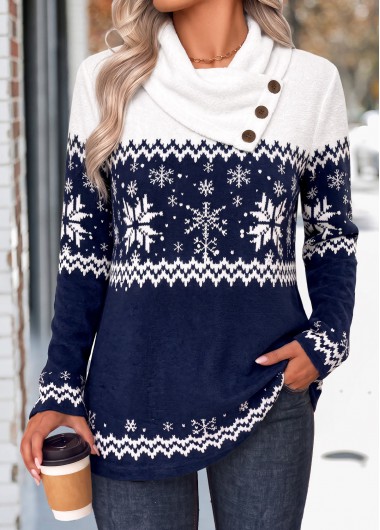
Great sweater. Very warm and nice looking. Perfect for sitting next to a fire place on cold winter nights.
 MODLILY CLUB
% Off

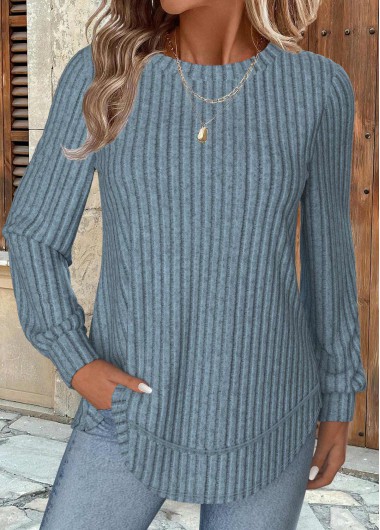
Ribbed sweaters make repeated raised lines a visible part of the garment. The texture can carry across the body or define a cuff, hem, or neckline, giving those areas a rhythm that differs from a smoother knit. Let the line pattern supply the detail beside plain separates, with the sweater's shape determining how much of it remains visible.
A ribbed body presents the texture across a broad area. Smooth trousers or a simple skirt give that repetition a clear background, especially when the top and bottom stay within related colors. The surfaces then distinguish the pieces. Knit sweaters collect other stitch structures, while the collection focuses on the recognizable repeated line of ribbing.
A ribbed cuff makes a smaller frame at the wrist. The repetition may connect with the hem or neckline, creating related edges around the main body of the sweater. A watch can sit beside that cuff as a separate detail. Keep the surrounding accessories simple enough for the ribbed boundary to remain visible within the complete sleeve.
Neckline shape changes how the texture meets the face. A rounded opening gives the ribbed surface a compact border, while a V-shaped line creates an angled edge through the upper center. A collared shape adds another outline above the stitch work. Choose the opening according to the base layers and jewelry that you want to wear nearby.
A dropped shoulder moves the beginning of the sleeve farther out from the natural shoulder point. On a textured knit, that seam can become a visible break in the surface direction. Drop-shoulder sweaters focus on that construction, leaving this collection centered on the ribbing itself and how it appears across the garment's different parts.
The hem controls where the line pattern ends against the bottom. A longer body extends the textured area over slim trousers, while a shorter boundary leaves more of a skirt visible. The contrast between the repeating knit and a smoother lower half can give both pieces a clear role. Let the proportions support the detail you want to show.
Color can make the relief of ribbing appear more or less pronounced. A lighter shade may reveal the shadows between raised lines, while a dark surface creates a quieter tonal effect. An open jacket adds another frame around that texture. Arrange the coat and scarf so the visible panel includes enough of the ribbed area to appreciate its rhythm.
Line direction gives ribbing its particular character. A vertical repeat carries the eye along the body, while a change in direction near a neckline or sleeve introduces another boundary. Treat those lines as visible design details when you add jewelry or a scarf. A simple accessory can sit beside them without creating a second competing pattern.
Fine, closely spaced ribs create a different impression from broader raised columns. The finer repeat can read as a quieter texture at a distance, while wider lines become a more obvious part of the outfit. Choose the scale alongside the bottom and outer layer. A smooth coat gives a more pronounced rib room to remain central.
A garment with several textured areas can use the cuff, neckline, and hem as related points. If those edges repeat the same line pattern, they form a frame around the body. Keep visible shirt collars or cuffs plain when the knit already has those details. Each small boundary can then remain distinct while belonging to the same outfit.
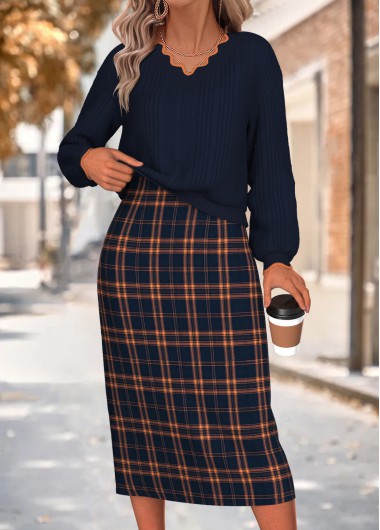
With a patterned bottom, let the scale of the print and the ribbing work together. A small repeat in the skirt may sit beside broader knit lines, while a quieter skirt gives fine texture more room. Patterned sweaters offer another surface-led direction. For everyday combinations built around a relaxed setting, casual sweaters bring different details into the wardrobe.
A plain bag can repeat the sweater's color while the ribbing provides the surface interest, keeping the accessory connection quiet beside the repeated raised lines.
The wider sweaters collection includes further colors, openings, and silhouettes. In a ribbed style, begin with where the raised lines appear, follow their direction through the body and sleeves, and give the surface space beside the other garments. That arrangement makes the repeated texture a considered part of the outfit rather than a small detail lost beneath extra layers.
Create Account
Create password to get more coupons!
$100 OFF
New Members only!
Create Account
Create password to get more coupons!
$100 OFF
New Members only!
$20 OFF
for text subscribe

*It includes 4 coupons
Expired:
CODE:
Expired:
Fast Self-Service for Facebook Users.
24/7 online service available to all customers.
To avoid waiting time online, you could submit a ticket to us, our agent will respond within 1 business day.